


November 24, 2025
Since the early 2010s, and especially following its 2022 invasion of Ukraine, Russia has engaged in hybrid warfare to advance its military goals and weaken European security from within. In 2025, Moscow is relying on both familiar and newly adapted tactics to influence and destabilize European governments and societies. These actions include suspected drone incursions into NATO airspace, direct and indirect support for far-right political parties across the continent, and a series of arson attacks linked to Russian operatives. Russian hybrid tactics warrant close study, as their recent escalation reflects a growing willingness to pressure European states through unconventional means.
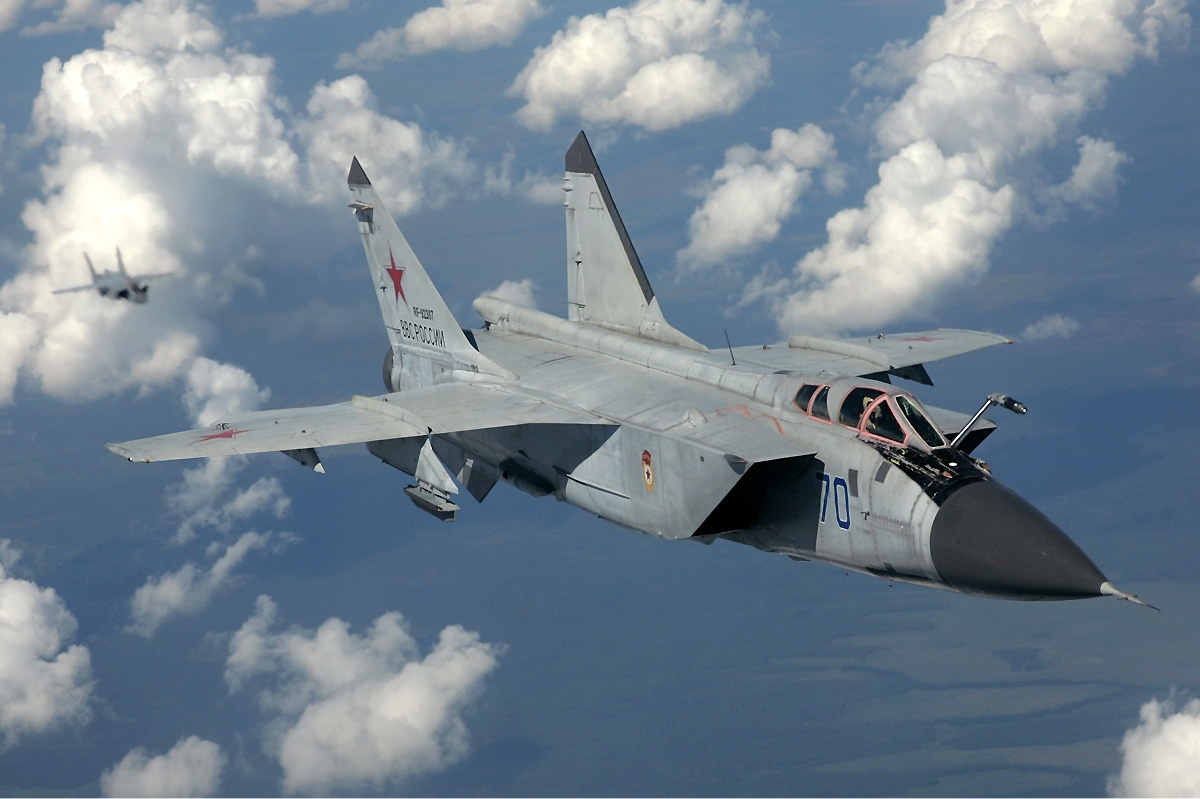
On September 9, NATO forces scrambled to intercept between 19 and 23 Russian Gerbera drones over Polish airspace, successfully shooting down four. This was not the last incursion. On September 13, a Russian drone entered Romanian airspace and was later downed. Six days after that, drones were spotted over Spain, and by the end of the month, Russian drones had again violated Belgian and Romanian airspace. The most significant incident occurred when three Russian MiG-31s entered Estonian airspace, where they “turned off their transponders, made zero contact with air traffic controllers in Tallinn, and had zero flight plans.”
Several factors appear to motivate these incursions. First, Putin may be signaling that Russia does not fear NATO retaliation. Such actions could serve as a form of psychological warfare intended to intimidate European citizens. Second, Gerbera drones are capable of conducting surveillance. Third, the tactic imposes significant costs on European militaries. The drones themselves are relatively inexpensive—costing roughly €50,000 each—while operating a Dutch F-35 stealth fighter costs about €40,000 per hour, and each missile used to shoot down a drone can cost more than €1.7 million. Fourth, the rising financial burden may prompt European nations to divert funds away from aid to Ukraine in order to prioritize defending their own airspace. Finally, these provocations could be designed to deepen divisions between Europe and the United States. This dynamic was evident in former President Trump’s response to the incursions, when he told reporters they “could have been a mistake.” The remark angered European leaders and underscored Trump’s preference for focusing U.S. foreign policy on the Western Hemisphere rather than on Europe.
Another element of Moscow’s hybrid strategy has been its cultivation of ties with far-right European parties that hold strong anti-EU and anti-NATO positions. In France, Russia has developed close links with the National Rally party. Its leader, Marine Le Pen, has met with Vladimir Putin on multiple occasions, including a visit to the Kremlin before the 2017 French presidential election. In 2014, the party received a €9.4 million loan from a Russian bank, which it only repaid in 2023. The party’s alignment with Moscow is evident in its voting record: National Rally has never supported a single resolution backing Ukraine or condemning Russian aggression in either the European Parliament or the French National Assembly.
In Germany, Russia has cultivated connections with the far-right Alternative for Germany (AfD) party. Several AfD members have been implicated in scandals, including allegations that they received payments from Voice of Europe. AfD politician Maximilian Krah’s aide was arrested for allegedly passing sensitive European Parliament information to the Chinese government, one of the Kremlin’s key allies. Recently, German lawmakers accused AfD of harboring a Russian “sleeper cell,” citing instances where AfD members repeatedly questioned the government about arms deliveries to Ukraine, drone production, and military bases. In addition, Der Spiegel reported that a secret manifesto had emerged from a meeting between Russian operatives and AfD members, portraying Germany’s politics as divided into two camps: “the Party of Germany’s Enemies” and “the Party of Friends.” This strategy appears aimed at transforming AfD into a political vehicle for Russian interests and deepening divisions within German society.
A third and less-discussed hybrid tactic has been a wave of coordinated arson attacks across Europe. In Poland last year, a fire broke out at Marywilska 44, a shopping center in Warsaw, prompting Prime Minister Donald Tusk to post on X that “the actions were coordinated by a person residing in Russia.” Later that year, Russian GRU operatives were accused of plotting to ignite incendiary devices on a Polish cargo plane. In 2025 alone, multiple arson attacks have occurred, including a warehouse fire in London at a facility owned by a Ukrainian logistics company and an attack on a supermarket in Estonia. Some incidents appear intended to disrupt aid to Ukraine, while others target seemingly random civilian sites. The motivations behind these attacks are diverse: they are low-cost, create psychological fear, and threaten ordinary citizens whose businesses and local stores could be destroyed. Such tactics risk eroding public support for Ukraine, as citizens grow anxious about the prospect of further sabotage.
In conclusion, Russian hybrid warfare has evolved into a sophisticated, multifaceted strategy designed to destabilize European security, influence domestic politics, and sow division both within Europe and between Europe and the United States. The escalation and diversification of these actions in 2025 underscore the urgent need for European governments and NATO to closely monitor and counter Russia’s hybrid operations. Understanding these methods is essential to preserving the cohesion and resilience of the Western alliance.
Matthew MacKay is a M.A. student in the International Security program with the Schar School of Policy and Government at George Mason University. He has a B.A. (honors) in Political Science and a minor in History from the University of Connecticut. His academic interests are in hybrid warfare, Middle Eastern security, Eastern European security, and arms control.
Image can be found here.
