



March 26, 2026
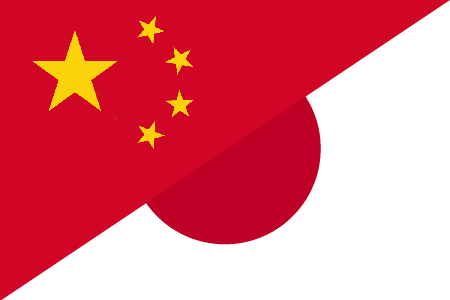
While many Americans understand the complexity and seriousness of cross-strait tensions between China and Taiwan, most are unaware of the Senkaku Islands dispute and its potential to drag the United States into a major regional war against China. The Senkaku Islands comprise a group of five islands and three rocks in the East China Sea that are under Japanese administration, with the largest being Uotsurijima Island, which is about 3.9 square kilometers. This is one of two major territorial disputes that exist between China and Japan, with the other being the overlapping exclusive economic zones (EEZs) between the two nations in the East China Sea. The waters around the Senkaku Islands are known for their rich fishing grounds that are valued at $7 billion and are estimated to contain at least 200 million barrels of oil and 2 trillion cubic feet of natural gas. The islands also hold strategic importance since they are part of the First Island Chain and only 170 kilometers east of Taiwan, making their location crucial for any military strategy in the Western Pacific. To truly understand the Senkaku Islands dispute between Japan and China, it is essential to grasp the historical context behind these highly contested islands.
The Senkaku Islands are claimed by Taiwan, China, and Japan, with Taiwan referring to the islands as Diaoyutai Islands and China referring to them as Diaoyou Islands. Both Taiwan and China claim that the Senkaku Islands have been a part of China since the Ming Dynasty, with China further claiming that the islands were shown in Ming maps and documents as part of the Ming’s coastal defenses. Japan claims to have discovered the Senkaku Islands during a government survey in 1885 and formally incorporated them into its territory under the principle of terra nullius in 1895, as the islands were uninhabited. Japan formally incorporated the Senkaku Islands in the aftermath of the Sino-Japanese War and the signing of the Treaty of Shimonoseki, which also made China cede Taiwan and the Penghu Islands to Japan. Following Japan’s defeat in World War II, the Senkaku Islands, which are part of the larger Ryukyu Island chain, were placed under U.S. administration and were subsequently returned to Japan in 1972 under the Okinawa Reversion Agreement. It was around this time that the Chinese Foreign Ministry made its first formal claim on the Senkaku Islands in December of 1971 and has been building up its military capabilities to assert its claim over the islands.
In 1968, U.N. sponsored preliminary surveys indicated vast amounts of oil and natural gas near the Senkaku Islands, which caused both Taiwan and China to be more outspoken in their claims to the islands (Chubb, 2024). However, China initially prioritized establishing diplomatic relations with Japan in 1972 and agreed to delay discussions about the Senkaku Islands, believing they would eventually come under Chinese control. Although both China and Japan agreed to delay discussions on the Senkaku Islands, the dispute occasionally resurfaced, as Chinese fishing activities near the islands occurred a few years later. However, the Senkaku Islands dispute would not truly escalate until September 2010, when a Chinese fishing trawler rammed into two Japanese Coast Guard (JCG) vessels after it was caught operating in waters near the Senkaku Islands. The operators of the Chinese fishing trawler were immediately taken into Japanese custody, and their release was demanded by the Chinese government, which caused an international incident and soured Sino-Japanese relations. Even though the 2010 Senkaku Islands incident eventually de-escalated, the Chinese government has since then adopted even more aggressive tactics to assert its claim to the islands.
The tactics that China has utilized to assert its territorial claim over the Senkaku Islands are known as “gray-zone” tactics, and they are meant to gradually gain control of the maritime zone and airspace over these islands and undermine confidence in U.S. commitment to Japan. These tactics include sending militarized Chinese Coast Guard (CCG) vessels to enforce Chinese maritime law around the Senkaku Islands, deploying fishing vessels for surveillance and presence operations near the islands, and regular violations of Japanese airspace. These gray zone tactics have been extremely effective as these acts take advantage of loopholes within the legal frameworks and decision-making cycles of both the U.S. and Japanese governments. This is mainly due to differences in legal interpretations between Japan and the U.S. over Article 5 of the U.S.-Japan Security Treaty, which obligates the U.S. to militarily defend Japan if it is attacked by a foreign nation. The 2010 Senkaku Islands collision incident highlighted this issue, as there were questions over whether that incident represented an armed attack against Japan. To counter these asymmetrical threats from China, the U.S.-Japan alliance urgently needs to adapt and enhance its capabilities, doctrines, and contingency planning between the Japanese and the U.S. governments. Constructing war games with gray-zone scenarios and enhancing joint interoperability between U.S. Forces-Japan and the Japanese Self-Defense Forces will help the U.S.-Japan alliance counter these tactics and ensure a credible deterrent against Chinese aggression in the East China Sea.
Xavier Isaac is a second-year graduate student in the M.A. program in International Security. He graduated with a bachelor’s degree in history from Virginia State University with a concentration on American history. During his tenure as a student at VSU, he studied at the University of Oxford for three months as part of a study abroad semester. His research interests are U.S. foreign policy, counterinsurgency, and intelligence studies.
Image can be found here.
